
2026-10-17 ·
Roof Repair vs. Replacement: Signs It May Be Time for a New Roof in Springfield, MO
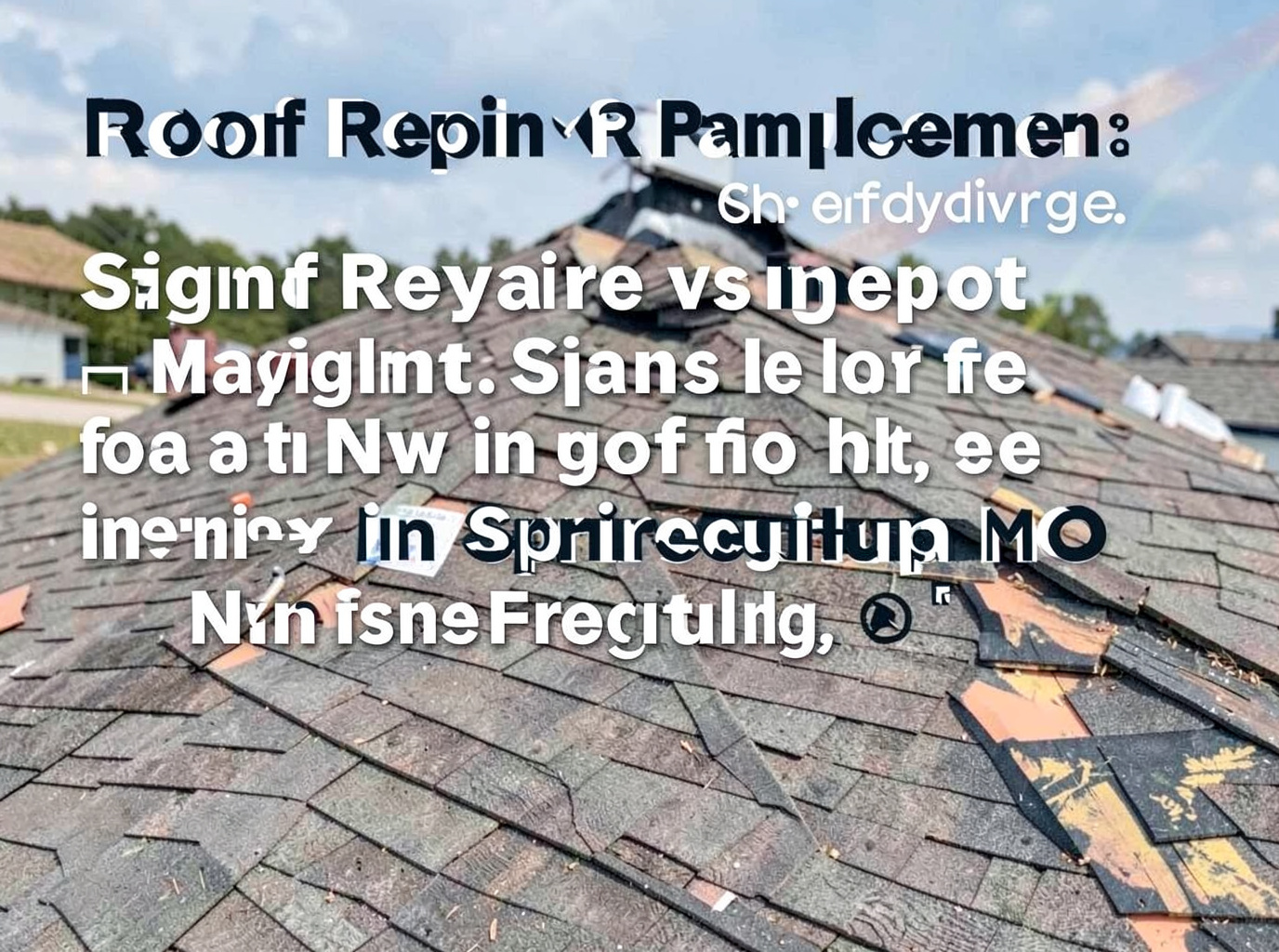
When widespread granule loss, multiple leak points, and sagging appear together on roofs in Springfield, replacement usually outperforms ongoing repairs. Homes built decades ago in areas such as Rountree and Downtown often reach this point after repeated cycles of summer heat and winter freeze-thaw stress.
Reading Damage Patterns Shaped by Local Climate
Springfield sits in a humid continental zone where summer temperatures push asphalt shingles to their limit while winter lows pull moisture into cracks that then expand. In Greene County, this produces cupping, cracking, and ice dam formation along eaves, especially on north-facing slopes common in older Rountree homes. A single leak might be addressed through targeted roof leak repair, yet when leaks recur in three or more locations after one winter, the underlayment and decking have typically absorbed enough water that piecemeal fixes no longer restore integrity. Crews working these blocks routinely find rotted sheathing hidden beneath otherwise intact shingles, a direct result of the area's freeze-thaw frequency.
Signs Visible from the Ground in Springfield Neighborhoods
Walk any street in Downtown or University Heights and you will notice missing tabs, exposed felt, and rust streaks at flashing lines. These visible markers become decisive when paired with interior stains that reappear after every heavy rain. In Parkcrest, where many homes sit on slightly sloped lots, water often pools at valleys; once that pooling reaches the point of daylight visible from the attic, replacement becomes the practical step. Homeowners who track these changes over two seasons can avoid the cycle of temporary patches that fail again the next cold snap. Checking after storms also reveals whether wind-driven rain has lifted edges that then stay raised through summer heat.
When Repair Costs and Frequency Point to Replacement
Repeated service calls in the same calendar year usually signal that the roof has passed its effective service window for the local climate. A contractor based in Springfield can document the pattern during a thorough attic inspection, noting whether decking has softened or insulation shows moisture rings. At that stage, continuing with isolated fixes on homes near Missouri State University or the Springfield Art Museum often exceeds the cost of a coordinated replacement that restores proper ventilation and ice-dam protection. The decision rests on the extent of hidden damage rather than surface appearance alone.
Planning Replacement Around Seasonal Realities
Scheduling work between late spring and early fall avoids the ice-dam season that complicates jobs in Republic and Branson corridors. Crews can then address ventilation upgrades that reduce future moisture issues common in Greene County attics. Homeowners in these areas also benefit from reviewing storm-related guidance such as roof inspection tips after hail, wind, and storms in Springfield, MO before finalizing scope. Proper timing keeps the project aligned with the region's weather windows and prevents the need for emergency interventions later.
Continuing Education on Winter Roof Issues
Preventing ice dams starts with understanding how Springfield's temperature swings affect older rooflines. Guidance on sealing attic bypasses and improving airflow appears in resources like how to prevent ice dams and winter roof leaks in Springfield, MO. When those measures are already in place yet leaks persist, the roof itself has reached the limit of what repair can restore. Replacement then provides a clean deck, new underlayment, and updated flashing details suited to the county's conditions.